Prom is the perfect moment to celebrate in style, and coordinating your look with your date can make the night—and your photos—unforgettable. This prom color pairing guide explains how to match styles and colors without looking overly staged, with practical tips on palettes, silhouettes, accessories, and the small details that pull everything together. Whether you’re renting a tux, buying a suit, exploring prom dress types, or choosing the best prom dress, you’ll find step-by-step advice to create a cohesive, eye-catching look for the 2026 prom season. If you’re comparing dress styles prom trends or narrowing in on the best prom dress for your body type and palette, the ideas below keep coordination easy and stress-free.
Understanding Prom Outfit Coordination
Great coordination signals intention, confidence, and partnership. A unified look doesn’t mean identical pieces; it means visual harmony, sharing tones, textures, or design elements so your outfits tell the same story. When your styles complement each other, the result feels polished rather than forced. This prom color pairing guide focuses on harmony across suits, tuxedos, and prom dress types so both partners feel like themselves while looking cohesive together.
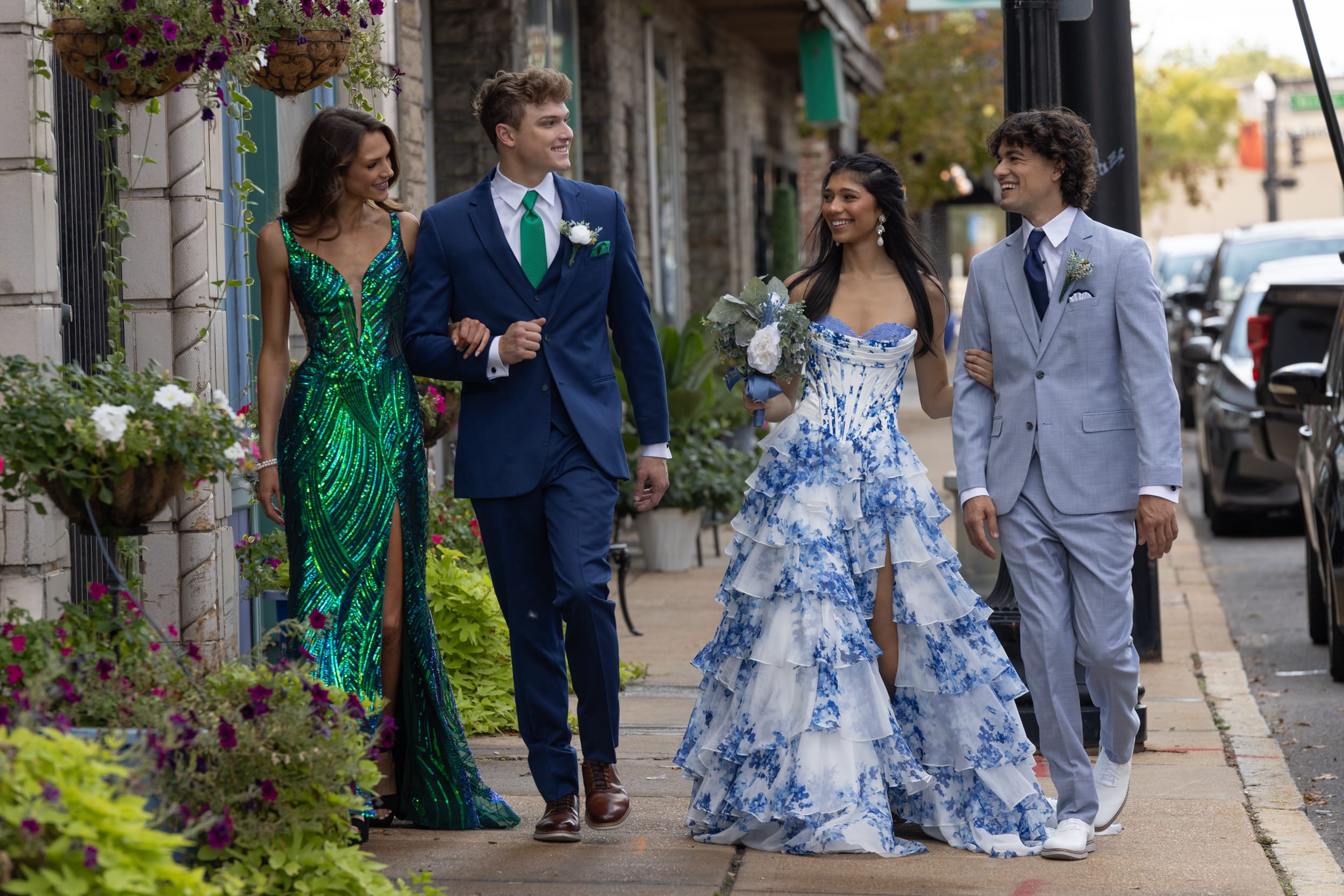
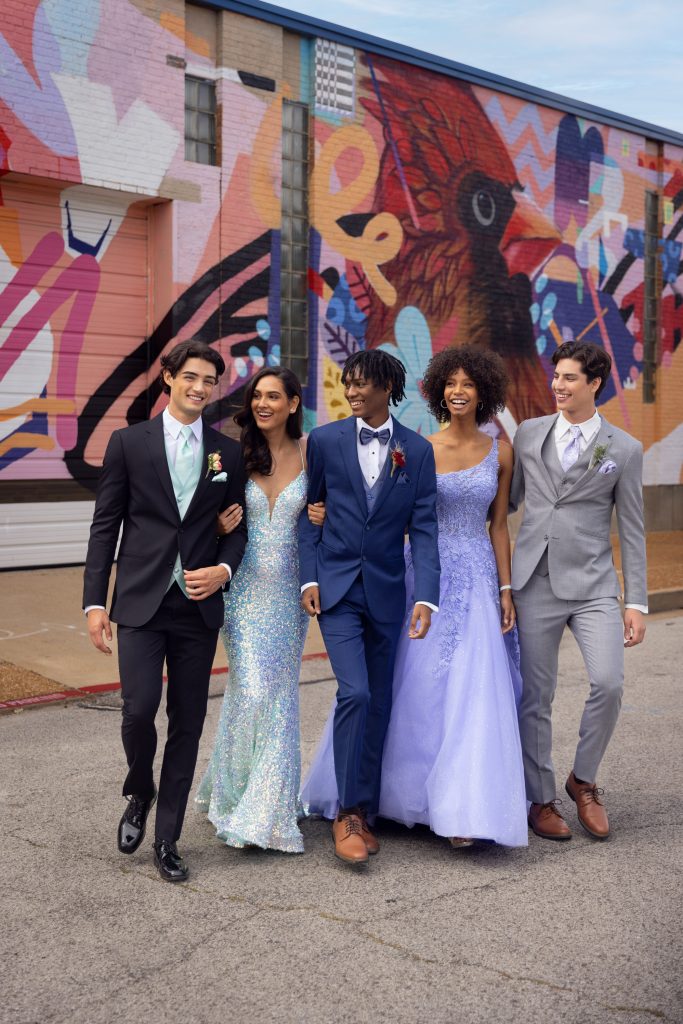
Coordination is especially impactful in photos. Matching accent colors, like ties, pocket squares, boutonnieres, and corsages, pull the image together, while thoughtful contrasts (such as a dark suit against a lighter dress) add depth. Golden hour lighting loves warm neutrals and metallics, which catch the light beautifully, while saturated jewel tones deliver dramatic contrast and vivid color. With the right dress styles prom pairings, think sleek columns with modern tuxedos or A-line gowns with classic suits, your photos will look balanced and intentional.
Two myths to ignore: you don’t need identical fabrics or an exact shade match to coordinate, and black-and-white isn’t the only safe route. Complementary or analogous tones often look more refined than exact matches, and today’s prom style embraces color, texture, and subtle patterns, when done intentionally. Focus on undertones and silhouette relationships, mixing prom dress types and tailoring details that play well together.
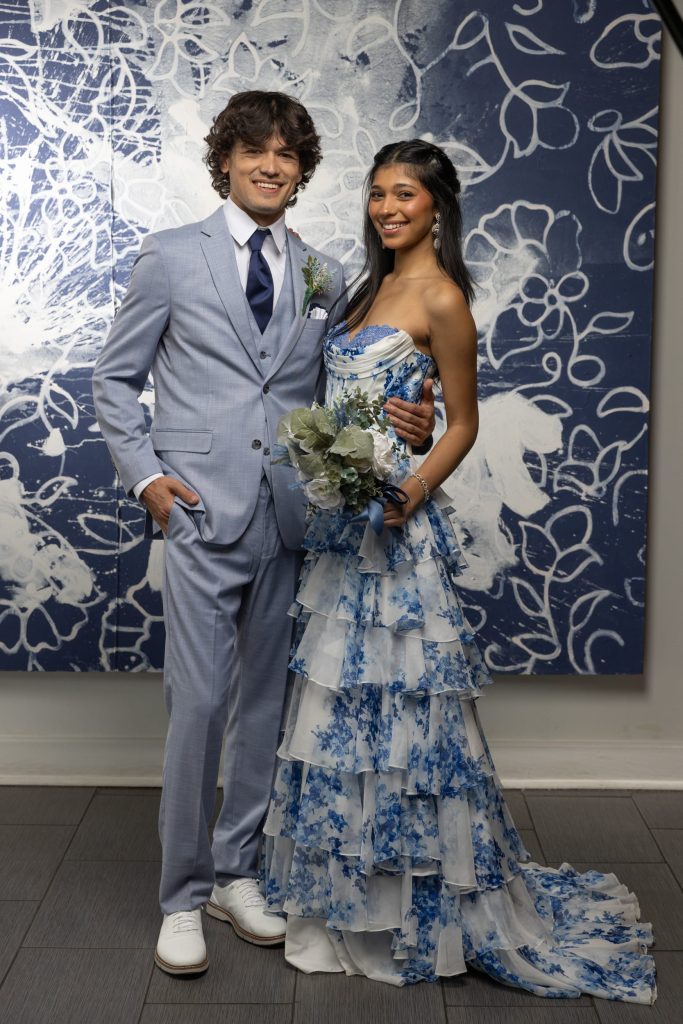
Exploring Color Palettes for Prom
Photography-friendly palettes for 2026 lean into expressive, richly toned color stories. Consider these combinations:
- Black with emerald or forest green
- Navy with ice blue or silver
- Charcoal with burgundy or merlot
- Sand or champagne with chocolate brown
- White dinner jacket with cobalt or sapphire
- Monochrome in deep plum or midnight blue
- Pastels like blush with soft gray
- Metallic mixes such as gold with black or rose gold with mauve
- High-impact duos: fuchsia with black accents, or electric blue with white and chrome
Choose colors based on undertone and contrast. Warm undertones shine in earthy or golden hues, think rust, olive, champagne, and warm reds. Cool undertones pop in jewel tones, blue-based reds, icy pastels, and silver metallics. Neutral undertones can flex either direction; look to your eye and hair color to decide whether warm or cool accents frame your features best. As a couple, you can mirror undertones or balance them, echo a warm-toned accessory from one partner in the other’s boutonniere, pocket square, jewelry, or nail color.
Seasonal cues refine your palette and help your outfits feel at home with the venue:
- Spring: pastels, floral-inspired hues, light neutrals
- Summer: brighter tones, oceanic blues, crisp whites
- Autumn: rich shades like amber, olive, plum, and bronze
- Winter: high-contrast schemes, black and white, red and silver, deep navy with metallics
If your prom theme or venue decor leans heavily into a particular hue, coordinate with it or choose a complementary color that won’t blend into the background. This ensures you stand out in group photos without clashing with the setting. Keep in mind how different prom dress types display color, satins read richer and shinier under flash, while chiffon and tulle soften bright hues—so select the best prom dress fabric for the way your palette photographs.
Diverse Styles: Finding Your Perfect Match
Prom formalwear includes a spectrum of silhouettes, and coordination starts with selecting the right base. Tuxedos feature satin details, a satin-faced lapel, a stripe on the trousers, and satin-covered buttons, paired with a formal shirt and often a bow tie. Suits are versatile and lightly structured; they work with ties, open collars (venue permitting), and a wide range of accessories. Gowns range from sleek column and mermaid styles to A-line and ballgown silhouettes, with options in satin, chiffon, tulle, sequins, and beading. Exploring prom dress types side by side helps you match the tailoring and formality level of your partner’s suit or tux.
Balance bold and classic elements by aligning one statement piece with supportive accents. If one partner chooses a heavily embellished gown, the other might opt for a classic tux or suit with a subtle pattern (like a micro-check) and a color-matched tie. If one wears a standout jacket, velvet in emerald, jacquard in midnight, or a white dinner jacket, keep the partner’s look streamlined and echo the jacket’s color in small details like a clutch, nail color, or gemstone accents. Thinking in terms of dress styles prom coordination makes it easier to assign “who leads” with texture or color in a way that feels balanced.
Fit and silhouette should support comfort and confidence. For tailored pieces, structured shoulders and a slightly nipped waist flatter many builds. A single-breasted jacket with a two-button stance elongates the torso, while peak lapels broaden the chest. For gowns, A-line shapes suit most body types by defining the waist and skimming the hips; mermaid cuts showcase curves; empire waists emphasize the neckline and float over the midsection; and high slits add height and movement. Whatever you choose, prioritize mobility—prom is for dancing, not just posing. If you’re searching for the best prom dress for comfort and style, test how the fabric moves and consider straps, boning, and hem length during fittings.
Spotlight: Three Coordinated Looks to Try
Not sure where to start? These three ensembles show how to build a cohesive look around tried-and-true formalwear, with color ideas that photograph beautifully.
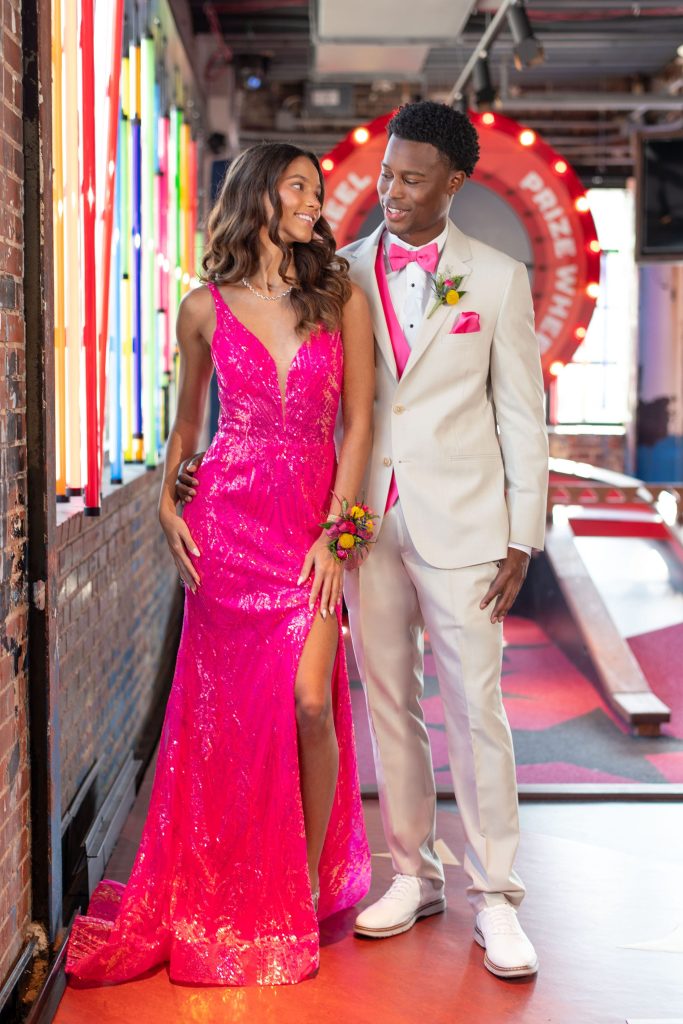
- Vibrant Pink Accents: Elevate the Tan Performance Suit with bold pink highlights for a striking and modern look. Let the Tan Performance Suit serve as a versatile canvas, complemented by vivid pink accessories that capture attention. Pair it with a bright pink tie, polished shoes, and a corsage bursting with pink blooms and subtle greenery. Choose a gown in hot pink, fuchsia, or a lively coral, and incorporate rose gold metallics in jewelry and clutch details. Among prom dress styles, satin and crepe in these shades create a stunning vibrant narrative that complements this eye-catching prom guide: styles and colors.
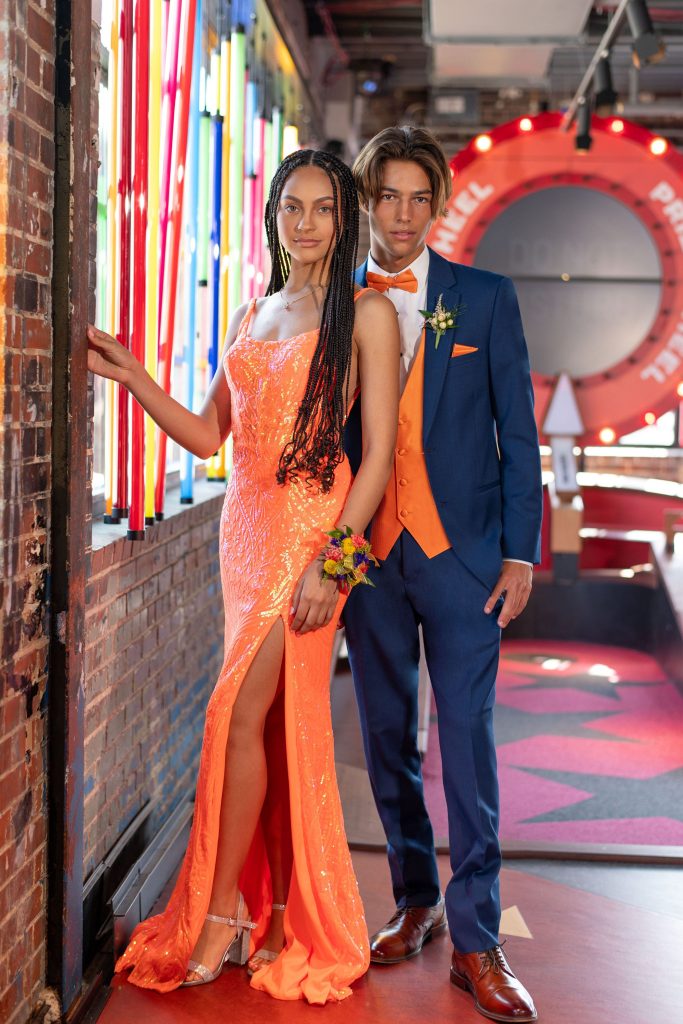
- Cool and Crisp Blues: A blue suit strikes a balance between classic and current, perfect for oceanic, silver, or monochrome palettes. Start with the Blue Performance Suit for clean lines and mixable tones. Try it with an ice blue or silver tie, polished black or deep brown shoes, and a pocket square that echoes the partner’s gown. Coordinate a gown in ice blue, soft gray, or navy with silver jewelry for high shine in photos. Chiffon A-lines, satin columns, and beaded sheaths are excellent dress styles prom options for this palette.
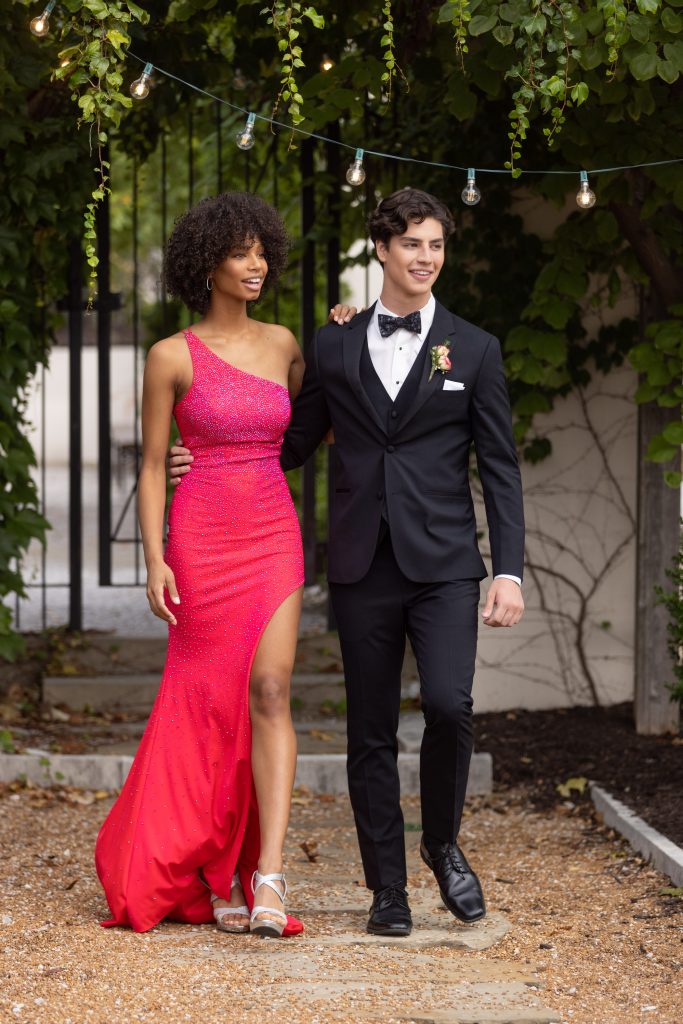
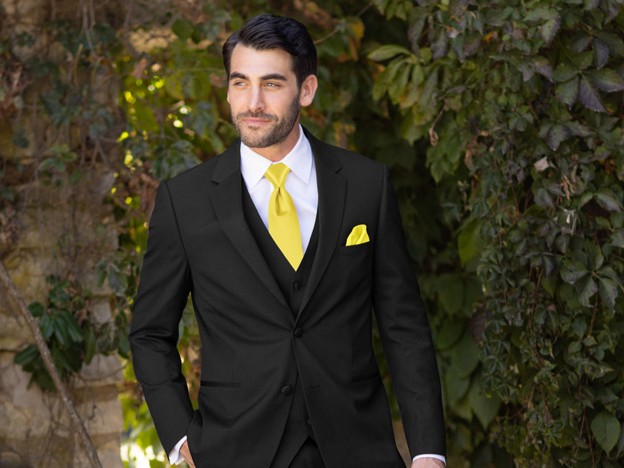
- Classic Black Elevated: A black tuxedo is timeless and adapts to vibrant or metallic accents. Choose the Black Force Performance Stretch Tuxedo for a sharp, formal foundation. Try it with a satin bow tie, black shoes, and a boutonniere that picks up the partner’s dress color. Coordinate a jewel-toned gown in emerald, ruby, or sapphire, or opt for a sleek black-and-white moment with chrome or gold accents. If you’re aiming for the best prom dress impact with this combo, look to rich fabrics like velvet or sequins to hold their own against a classic tux.
Accessorizing for Cohesion
Accessories make coordination effortless. Begin with a shared accent color: ties or bow ties, pocket squares, boutonnieres, and corsages can echo a dress or suit element without being identical. If the gown uses metallic beading, repeat that metal tone in cufflinks, studs, a belt buckle, or hair clips. Texture matters too, pair velvet jackets with satin lapels and polished shoes, or counter a matte suit with a subtle sheen in the tie to catch the light. For dress styles prom outfits, match bag hardware and jewelry to the chosen metal for a unified finish.
Shoes and bags anchor the look. Clean, well-polished footwear elevates even the simplest suit or tux. Patent leather pairs well with tuxedos; matte calfskin complements suits. For gowns, strappy heels or polished flats in metallic or neutral tones create visual flow without competing with the dress. Coordinate the handbag or clutch with your metallic choice—if your jewelry is gold, keep the bag hardware gold-toned. Comfort counts: use gel inserts, break in shoes, and choose a manageable heel height so you can enjoy the dance floor.
Use jewelry to unify colors. A necklace or earrings that pick up an accent hue can harmonize the overall look. Layered bracelets or a cuff can repeat metallics from a partner’s watch or cufflinks. If the outfit is highly detailed, fewer, bolder pieces keep the look clean; if the outfit is minimal, delicate layered jewelry adds interest without overpowering the silhouette. When comparing prom dress types, factor in neckline and sleeve design so accessories enhance rather than compete.
Common Coordination Pitfalls
Keep your palette tight to avoid clashes. Focus on two main colors plus one neutral. If one partner wears a patterned piece, like a floral dress or jacquard jacket the other should stick to subtle patterns or solids. Watch undertones carefully; a cool magenta tie can clash with a warm rose dress even if the brightness appears similar. The best prom dress in a busy print looks cleaner when paired with a solid suit and carefully chosen accents.
Don’t chase an exact shade match. Different fabrics and lighting make precise matching tricky. Instead, aim for tonal harmony by choosing a tie a shade deeper or lighter than the dress, or select a framing neutral like charcoal, navy, black, champagne, or metallics. This strategy looks intentional and photographs better under mixed lighting. Use this matching prom guide: styles and colors approach when selecting accessories for varied dress styles prom to keep the look cohesive.
If you’re renting, expect slight color variations across manufacturers. Manage expectations by checking swatches both in daylight and indoor lighting. Bring a dress or fabric sample when selecting vests, ties, and pocket squares. Confirm the color name and fabric type with the retailer, and order early so you have time to swap if the tone is off. If the exact hue isn’t available, pivot to a coordinating neutral or metallic rather than forcing a near-match that can look off in photos.
Final Touches: Make Your Outfits Stand Out
Fit is everything. A well-fitted suit or tux looks custom even when rented. Check that the jacket sits cleanly on the shoulders, sleeves show a quarter-inch of shirt cuff, and trousers have a light break over the shoe. For gowns, hem to match your heel height and consider a bustle for longer styles to avoid tripping. Simple tailoring, waist suppression, sleeve length adjustments, and strap tweaks, sharpens your silhouette and elevates the entire look. When evaluating prom dress types, keep alterations in mind; the best prom dress is the one that fits beautifully after tailoring.
Plan hair and makeup with your outfit in mind. Hairstyles should complement necklines and lapels: updos highlight statement earrings and structured necklines, while soft waves suit strapless or off-the-shoulder designs. Coordinate makeup to your palette, warm eyeshadows and bronzy highlights pair with earthy schemes; cool shimmer and berry lips complement jewel tones. Partners should prioritize grooming: tidy facial hair, a clean neckline, pressed shirts, and well-kept nails complete the polish.
Build cohesion from head to toe by aligning textures, metals, and accent colors. Choose one metallic, gold, silver, or rose gold, and repeat it across jewelry, cufflinks, watch, clutch hardware, and belt buckles. Subtle choices, like matching sock tones to trousers or the tie color, add a considered pop. Florals should echo the outfit’s hues without competing; a simple boutonniere or corsage is often more photogenic than oversized blooms. Before prom, do a full dress rehearsal: wear everything at once, take photos in natural and indoor light, and make small adjustments. With thoughtful planning and a few tailored touches, your prom style will feel coordinated, comfortable, and uniquely yours.
Quick Coordination Checklist
| Step | What to Do | Why It Works |
|---|---|---|
| Pick a palette | Choose two main colors and one neutral or metallic | Keeps the look cohesive and easy to accessorize |
| Select base styles | Decide on tux vs. suit and dress silhouette together | Ensures formality levels and textures align |
| Assign the statement | One partner chooses a standout element; the other supports | Balances the overall look and avoids visual clutter |
| Match accents | Align ties, pocket squares, florals, jewelry, and metals | Creates visual harmony in photos |
| Test under lighting | Check colors in daylight and indoor settings | Prevents unexpected shade shifts in photos |
| Confirm fit | Schedule alterations and shoe break-in time | Comfort and clean lines photograph best |
Putting It All Together
Start with a mood: classic, modern, romantic, or bold. Choose a palette that flatters both partners, decide which piece will be the focal point, and repeat its color or texture in small accents. Build around a reliable base, tan for warm neutrals, blue for cool and crisp, or black for timeless polish, then layer in complementary accessories and consistent metals. Refer back to this matching prom guide: styles and colors as you narrow down dress styles prom and suit options.
For a warm, romantic look, try a champagne gown with a tan suit, cream boutonniere, and gold accents. For cool sophistication, pair a silver-detailed gown with a blue suit, ice blue tie, and silver jewelry. For high-contrast drama, choose a jewel-toned gown with a black tux, patent shoes, and a matching boutonniere. Each approach keeps coordination intentional and effortless while letting your personal style shine. Whether you prefer minimalist columns, classic A-lines, or dramatic mermaids, evaluating prom dress types alongside tailoring details will point you to the best prom dress for your night.
With the right palette, balanced styling, and smart accessories, you’ll look coordinated without looking copied, and every photo will capture a look you’ll love long after the dance ends. Use the guidance here on dress styles prom and suit coordination to make confident choices, and you’ll step into prom night feeling polished, comfortable, and photo-ready.